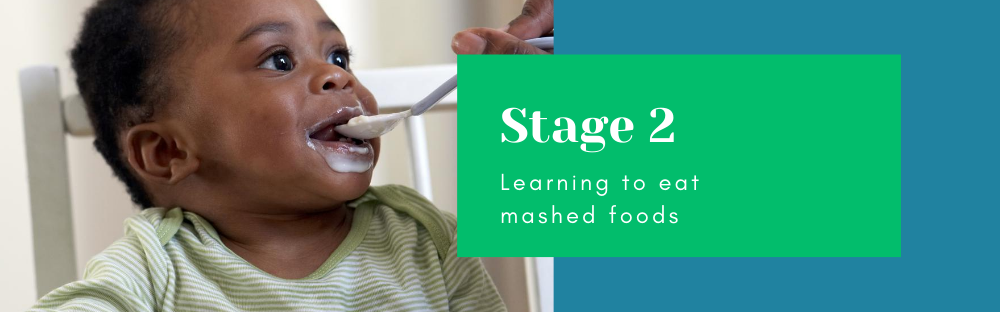
Signs your baby is ready to eat mashed foods:
- They successfully feed from a spoon and swallow the food that you feed them.
- They might have more interest in exploring their food by playing with it.
More variety is on the menu:
- Breastmilk and/or infant formula.
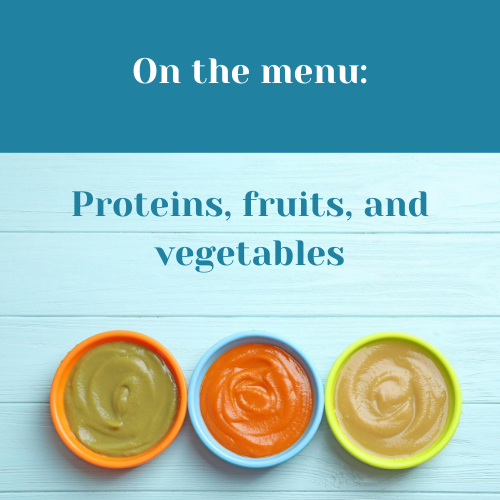
- Proteins: pureed meats (chicken, beef, lamb), pureed legumes, mashed tofu or mashed scrambled eggs.
- Fruits: banana, applesauce, pears, peaches, prunes, apricots, blueberry, or mango.
- Vegetables: cooked carrots, squash, sweet potato, peas, green beans, or avocado.
- Unsweetened yogurts.
You may be feeding on demand for breastmilk or infant formula. You may also begin to offer several solid meals a day soon. Your baby will probably get excited about mealtime now. Their appetite is getting stronger as they continue to grow. Remember to introduce new foods 1 at a time. Wait 3-5 days before introducing a new food to check for allergies or sensitivities.
Action Step
You may want to consider keeping a food journal. This will be a lot of fun for you as introducing new foods to your baby is exciting. You can also use it to track signs of a food allergy, sensitivity, or intolerance of any kind. Be sure to discuss any concerns you have with your baby’s health care provider. Introduce new foods every 3 days or so. This will allow your baby's body enough time to show any reaction to a new food. Using your food journal, you can identify any problem foods.
Picture it!
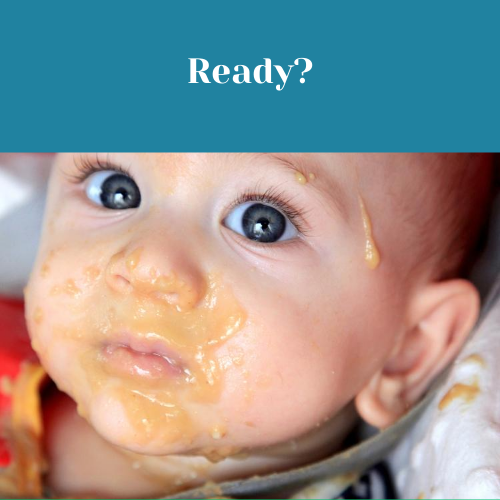
- Mashed foods will be thicker and should be smooth with a few tiny lumps.
- Your baby will be eating more variety. It will still be a very messy affair.
- Baby might play with their food often. This is normal.
- They are still getting the majority of their nutrition from formula or breastmilk.
Prepare
- It is helpful to use a small rubber spoon, a bib, a highchair or somewhere they can safely sit upright, and a bowl or two to hold the food.
- Some feedings will probably be better than others. Remember, they are just learning a new skill.
- If they reject a certain food, try it again at another feeding. Likely, they will eventually eat it.
- This is a good time to try introducing a cup with a small amount of water.

Food safety
* Make sure you have washed your hands with warm soapy water before serving any food to your baby.
* Be sure to offer solid food on a clean spoon and surface area.
* Be careful not to prepare any vegetables or fruits near uncooked meat.
* Rinse all vegetables or fruits with clean water before preparing them for your baby.
* Avoid giving your baby any foods they may choke on. You can learn more about possible food choking hazards from the Center for Disease Control (CDC).
* Avoid giving honey to babies younger than 12 months old.
* Avoid giving cow’s, goat’s, rice, or soy milk to babies younger than 12 months old.

Recommendation
Your baby may be ready for a cup around 6 months old and when they show the signs they are ready. You can learn more about your baby’s readiness signs and how to offer a cup in our Baby’s First Cup lesson.
Wondering when your baby will be ready for chopped foods? This resource will help you know when your baby is ready.
Be sure to cook eggs all the way through. Raw eggs or eggs that are not cooked all the way can be a risk of Salmonella. Salmonella is a foodborne illness.
Only serve your baby cooked eggs. Eggs that are not cooked all the way through or raw eggs can make babies sick.