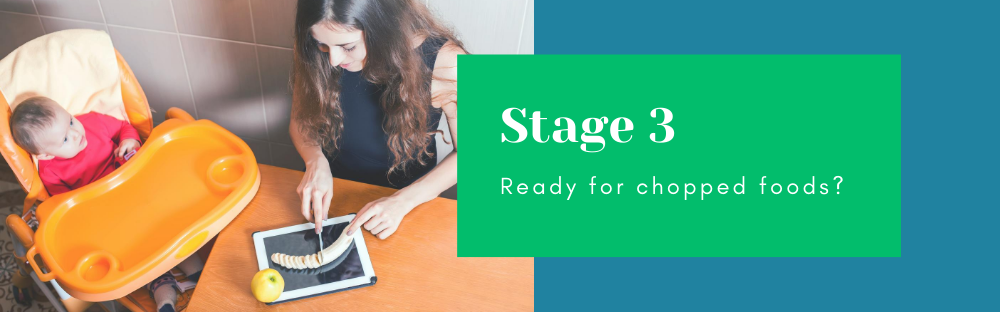
Signs your baby is ready to eat chopped foods:
- Your baby is making chewing motions.
- They can pick up food with their fingers. They may drop it. They are still practicing.
- They have control over chewing and swallowing. They are not pushing food out of their mouth.
On the menu:
- Breastmilk and/or infant formula.
- Chopped soft fruits with more fiber: apricots, cherries, blueberries, melon, or mango.
- Chopped soft cooked vegetables: eggplant, zucchini, broccoli, and cauliflower.
- Chopped protein foods: soft fish, scrambled eggs, or any others they have not tried yet.
- More textures: cottage cheese, mashed or chopped beans or tofu, or more lumpy or mashed foods.
- New possibilities: finger foods like teething crackers, small bites of soft noodles, and O-shaped cereals. Bits of food should be about the size of a pea.
.png)
Action Step
Offer your baby 3 meals a day and snacks between meals. They will probably get excited about mealtime. They are relying more on solid food for their nutrition. They may start to show less interest in formula or breastmilk now, but it is still very important to their overall growth and development.
.png)
Picture it!
- Your baby is looking like they know what they are doing now.
- They will squeal with delight when they see their favorite foods.
- Mealtime will likely get even messier!
- They will try to feed themselves.
- They will still need your help with the spoon.
- They can most likely handle more texture now too.
Prepare
- Sit your baby in a chair where they will be upright and secure. Provide a clean eating surface since food will be placed on it.
- It is helpful to use a small spoon and a bib will help limit the messiness.
- They are very interested in playing with food.
- They are exploring each new texture with their hands. Some of it will end up in their mouth, we promise!
- They will require a great deal of cleaning when they finish a meal now.
Combining foods
You can now start to combine different foods or feed them individually. If you feed them a combination, make sure there is only 1 new food in the mix. This will help identify a food that may cause an allergy or intolerance. You may want to try mixing one of their favorites with a new flavor. Think bananas with spinach. You can also start introducing some of your family favorites like lasagna or beef stew, either cut into small pieces or blended with some texture. If you have not already, introduce a cup to your baby.

Food Safety
* Make sure you have washed your hands with warm soapy water before serving any food to your baby.
* Be sure to offer solid food on a clean spoon and surface area.
* Be careful not to prepare any vegetables or fruits near uncooked meat.
* Rinse all vegetables or fruits with clean water before preparing them for your baby.
* Avoid giving your baby any foods they may choke on. You can learn more about possible food choking hazards from the Center for Disease Control (CDC).
* Avoid giving honey to babies younger than 12 months old.
* Avoid giving cow’s, goat’s, rice, or soy milk to babies younger than 12 months old.

Recommendation
Your baby may be ready for a cup around 6 months old and when they show they are ready. You can learn more about your baby’s readiness signs and how to offer a cup in our Baby’s First Cup lesson.
Wondering when your baby will be ready for tiny pieces of food? This resource will help you know when your baby is ready.