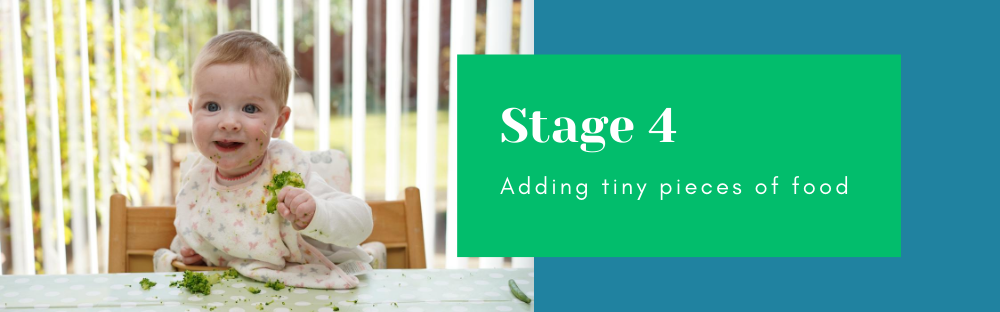
See the ideas below to help your baby get started with tiny pieces of food.
.png)
Signs your baby is ready to eat tiny pieces of foods:
They can easily pick up food with their fingers.
They have control over putting food in their mouth.
They are eager to use their spoon.
On the menu:
Breastmilk and/or infant formula.
Just about everything is on the menu.
Continue introducing any new foods one at a time to check for food reactions.
Make sure all food is soft so your baby can mash with their gums and safely chew and swallow it.
Small bits of food. Be sure to cut up food into tiny pieces and cook to soften.
.png)
.png)
Picture it!
- Your baby has become a solid food expert now.
They are happy eating finger food snacks.
They may grow excited waiting for food when they are hungry.
Mealtime is still a messy occasion. This mess-making phase will last into toddler years!
They will want to control the use of the spoon.
Ready?
- It is helpful to use:
a small rubber spoon
a bib
a highchair or somewhere they can safely sit upright
a bowl to hold the food
a clean tray for finger foods
Your baby will want to feed themselves more now.
They may choose to eat more finger foods rather than being spoon-fed.
Your baby will slowly choose solid food over wanting formula or breastmilk at this stage.
Until your baby is 1 year old, it is best to offer breastmilk or infant formula. After your baby turns 1 year old, you can introduce whole cow’s milk to their diet.
If you have not already, you can offer your baby a cup.
.png)

Food Safety
* Make sure you have washed your hands with warm soapy water before serving any food to your baby.
* Be sure to offer solid food on a clean spoon and surface area.
* Be careful not to prepare any vegetables or fruits near uncooked meat.
* Rinse all vegetables or fruits with clean water before preparing them for your baby.
* Avoid giving your baby any foods they may choke on. You can learn more about possible food choking hazards from the Center for Disease Control (CDC).
* Avoid giving honey to babies younger than 12 months old.
* Avoid giving cow’s, goat’s, rice, or soy milk to babies younger than 12 months old.

Recommendation
Your baby may be ready for a cup around 6 months old and when they show the signs they are ready. You can learn more about your baby’s readiness signs and how to offer a cup in our Baby’s First Cup lesson.
The next lesson in this lesson series is, Feeding Your 12 to 24-Month-Old. When you and your baby are ready, come back to take it.