
You may already know that babies shouldn’t sleep on their tummies or in a regular bed. But did you know the American Academy of Pediatrics (AAP) recommends that your baby share a room with their parents for the first six months to one year of their life? Sharing a room or “room sharing” means that your baby is in your room in their own safe sleeping space, like a crib, play yard or bassinet, not in your bed.
.png)
It can seem really hard to follow the ABCs of Safe Sleep if your baby wakes frequently and you are a tired new parent. Fortunately, there are some easy things you can try that will make it much more likely your baby will be able to fall asleep safely in their crib - and stay that way. Try these tips:
1. Whenever possible, put your baby to bed when they are awake but sleepy. You will be able to tell your baby is getting sleepy if their eyes are droopy or they start to yawn. This technique can help your baby get used to falling asleep in a crib.

2. To keep your baby warm on chilly nights, add a sleep sack over warm, snug-fitting pajamas rather than a blanket. If you are comfortable in your home, chances are your baby is too. Dressing your baby too warmly can be unsafe, and it won’t help them sleep better.
3. Try not to put off bedtime until your baby is fussing or cranky, and don’t skip naps. If your baby is overtired, they may have a harder time falling asleep alone.
4. Sometimes your baby may fall asleep in their infant seat or stroller, or in your arms. That’s OK! Just make sure that, once they are asleep, you put them down in a crib every time. If your baby is already asleep, then move them slowly into their crib, laying them down on their back. Then move your hands away gently.
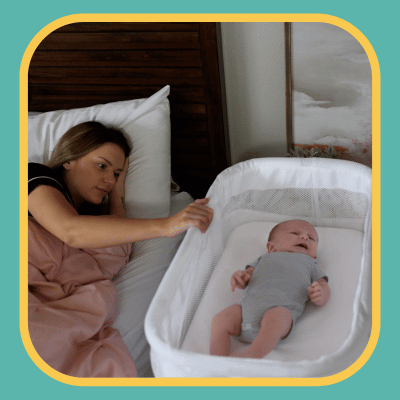
5. Once your baby is in their crib, stay nearby for a few minutes to make sure they stay settled. If your baby startles or begins moving around, you might want to try placing a hand on their tummy or saying “shhh” to help soothe them back to sleep.
6. Create a bedtime routine. It doesn’t have to be long or complicated! Something as simple as closing the blinds and reading a book in the same chair before every nap and in the evening can help “cue” your baby that it’s almost bedtime. Young babies may not be able to easily soothe themselves to sleep right away. Be patient: eventually, your baby will begin to learn to associate your routine with falling asleep.
7. When baby wakes up in the middle of the night, help them stay sleepy. Keep the lights low, speak in a quiet voice, and stay close to their crib while you feed or change them.
8. Be patient. It’s important to note that when experts and parenting books talk about young babies “sleeping through the night,” they are usually talking about any 6-hour stretch. That means that if your baby falls asleep at 8 PM and wakes up at 2 AM, they have technically “slept through the night.” It’s important to keep your expectations realistic. No matter where your baby sleeps, it’s normal for them to wake up frequently to be fed or changed.