.png)
There are many people, places and things involved to deliver food to your kitchen. Here are the basic steps of the food production chain:
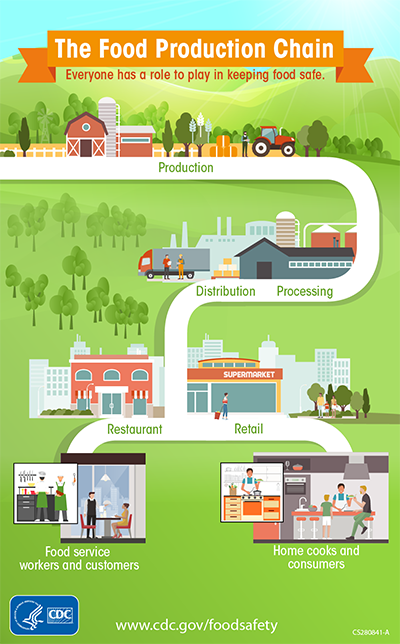
In the production phase
Farmers and ranchers use good agricultural practices. These practices reduce contamination.
In the processing phase
Trained personnel monitor food at critical control points.
In the distribution phase
Distributors use clean and chilled vehicles for food transportation.
In grocery stores and restaurants
Managers and staff follow food code guidelines. These guidelines protect the people purchasing and eating the food.
After you bring your food home
You follow safe food handling practices to help prevent foodborne illness.
.png)
Why are these steps important?
Contamination can happen at any point in the food production chain. For example:
In the production phase
Fields sprayed with contaminated water can cause fruits and vegetables to be contaminated. But, good agricultural practices can prevent this from happening.
In the processing phase
If germs contaminate the surfaces of storage bins, germs can spread to foods that touch these surfaces. But, if storage bins are kept clean, this can be prevented.
In the distribution phase
If food is not refrigerated properly on a transportation truck, bacteria can grow. But, keeping vehicles properly chilled can help prevent the growth of harmful bacteria.
In grocery stores and restaurants
If an employee comes to work sick and does not wash their hands carefully, they can spread germs on to food. But, if food code guidelines are followed, this can be prevented.
After you bring your food home
If raw meat juices drip on to fruits, vegetables, or other foods you plan to eat without cooking, this can spread bacteria. But, by separating your food carefully, you can prevent this from happening.
When food is being processed, there are certain times where trained personnel can act to prevent a food safety hazard. These are called critical control points. After critical control points are identified, processing plants can make sure that trained personnel monitor food at these important times
When food is being processed, there are certain times where trained personnel can act to prevent a food safety hazard. These are called critical control points. Processing plants can make sure that trained personnel monitor food carefully at these important times.