
B eginning to feed solid foods is exciting. The experience comes with a lot of new questions though - including food allergies. Here is some great information to boost your confidence. It can be helpful to know more about allergies.
TIPS: Introduce each new food 1 AT A TIME. Try to only introduce 1 new food every 3 - 5 days.
New guidelines suggest that you CAN start feeding common allergy-causing foods around 6 months. Your baby may have less risk of an allergy if you introduce common allergy-causing foods at the same time you offer other solid foods. If you have a family history of allergies, discuss your concerns with your baby’s health care provider.

.png)
What is an allergy?
An allergy is an immune system reaction to an outside substance. Types of substances include food, dust, pollen, pet hair, animal bites or stings, and medicine.
What is a food allergy?
A food allergy is the body’s immune system reaction to food and drink. Some people will have an allergic reaction just being near the food. This is not typical though. Most allergic reactions happen when the food or drink enters the body.
Who is likely to have food allergies?
Anyone can develop a food allergy at any time in life. Your baby is more likely to have a food allergy if your family history includes allergies (siblings or parents).
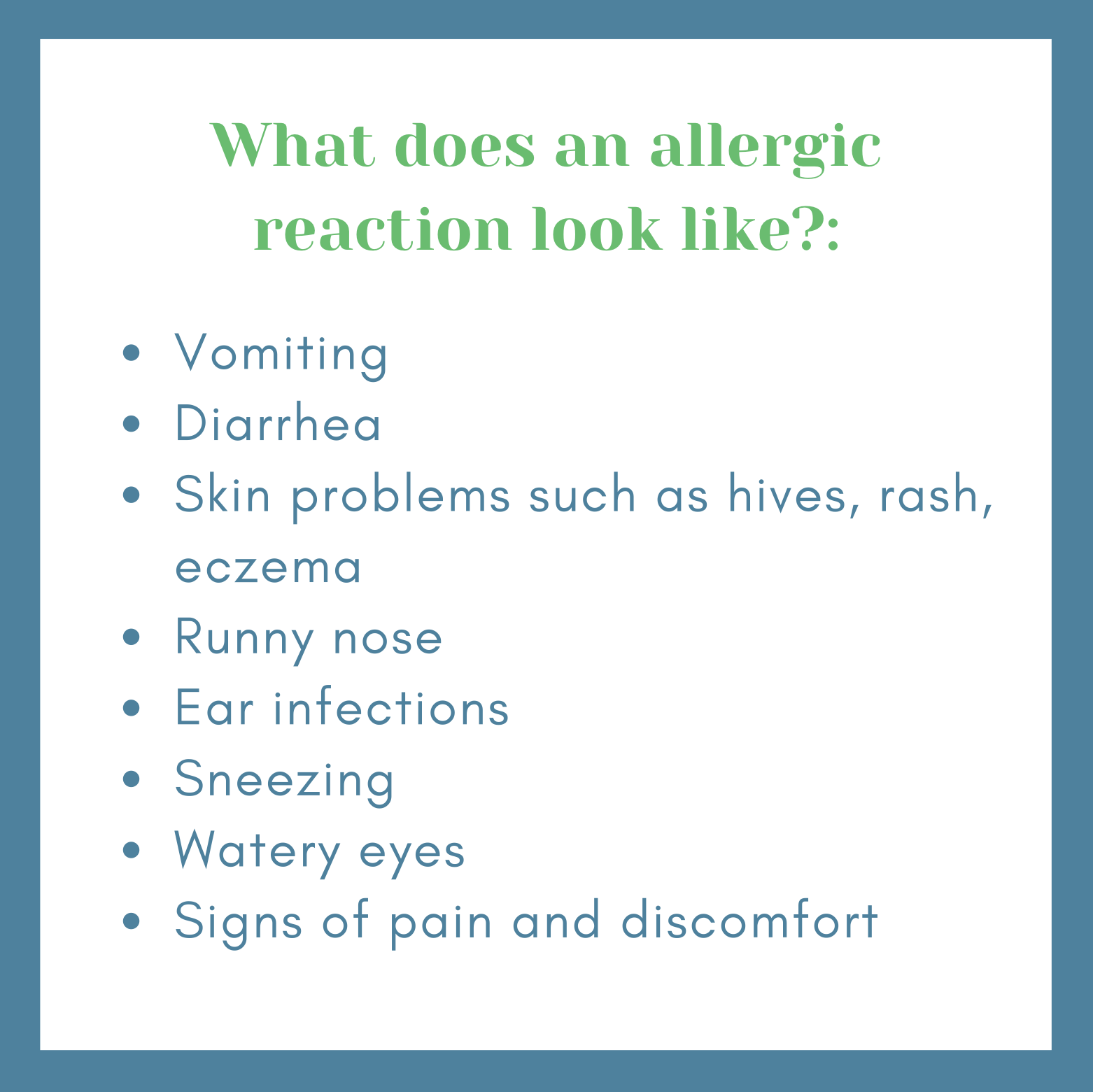
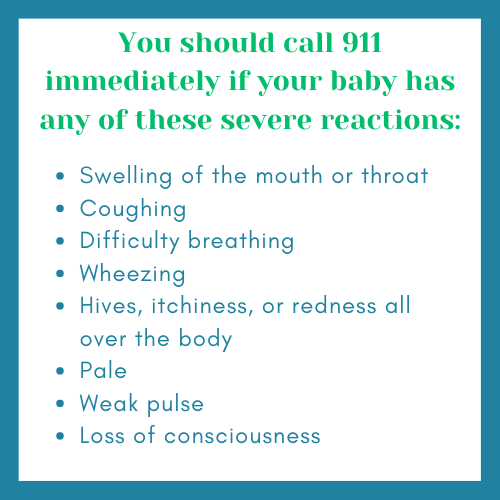
If any of these symptoms listed below in the first box occur, call your health care provider. If you keep a food journal, be sure to share the list of the foods you have given your baby.

Which foods are most likely to cause an allergic reaction?
Remember, most children do not have food allergies. However, you can be alert when introducing these foods to your baby.
- Cow’s milk
- Eggs
- Wheat
- Soy
- Tree nuts and peanuts (this includes spreads like peanut butter or almond paste)
- Fish and Shellfish
Will my baby have an allergy for the rest of their life?
There is good news! Studies show most children outgrow allergies to cow’s milk, eggs, wheat, and soy by the age of 5. Allergies to tree nuts, peanuts, fish, and shellfish can also be outgrown. However, they are more likely to continue throughout childhood.