
Sharing a meal or snack with a toddler can be fun. Use the tips below to help make meals and snacks enjoyable for everyone.
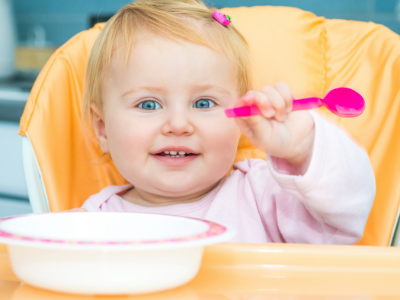
Offer a variety of foods, and let your child choose.
Many children need to try a new food up to 15 times before they learn to like it. Your child might be slow to accept new textures and tastes. It may take a lot of patience before they enjoy something new, like chopped meats or chopped veggies. Try offering more than one food at a time and let your child decide what they want to eat and how much.
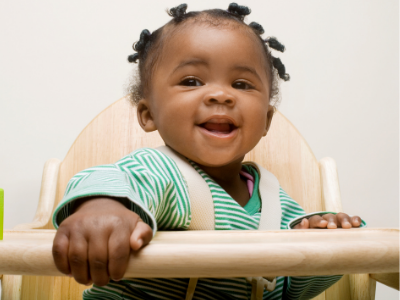
Listen and watch for what your child is telling you.
If games, songs, or lots of interaction help get them excited about eating new foods, that is great! Sometimes you may find that your child needs more quiet time to explore and focus on eating. Around 12 to 24 months of age, your child can learn to use some words or sign language to explain their hunger and fullness. All children learn to speak at different paces. If you are concerned about your child’s speech development, speak to your child’s health care provider or WIC counselor. They may ask for specific foods or may say “no” to eating more. Do not coax them to keep eating! Trust your child to tell you when they are hungry or when they are full. This will help them make healthier eating choices as they grow.
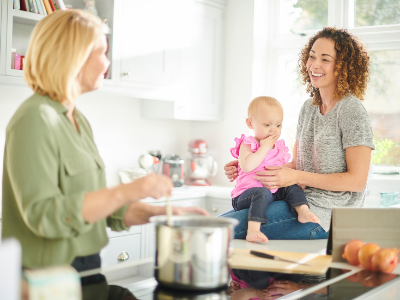
Make mealtime family time.
Including your child in family meals is a great way to get them excited about trying new, healthy foods. Try to eat together as a family at least one time a day. This can be any meal or snack your family wants it to be. Maybe your work schedule will prevent you from having dinner together. Plan to enjoy having an afternoon snack instead. Be flexible. Offer your child the same foods the rest of your family is eating. Be sure each food is the size and texture that is best for them.
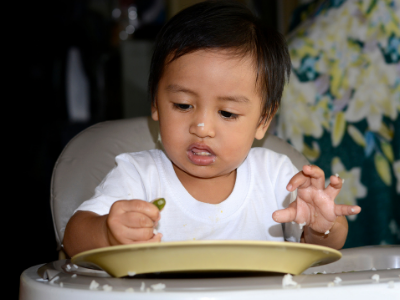
Follow a mealtime routine.
A consistent routine of calm, pleasant meals and snacks will help your child learn to love mealtime. It will also give your child many chances to learn about eating healthy foods. Make mealtime a meaningful learning experience. While eating with your child, tell them the names of foods and drinks. Role model happily eating a variety of foods. They learn by watching others.
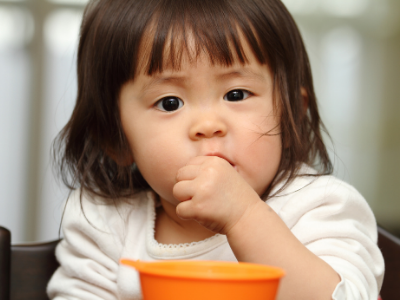
Let your child self-feed.
1-year-olds love to feed themselves. Offer your child a smaller spoon, fork, and open cup. Using these will help increase their independence. Plan for messes. Keep calm and patient while they learn.